Home › Common Problems › Moss and Algae Roof Growth
Moss and Algae Roof Growth
in Nashville, TN
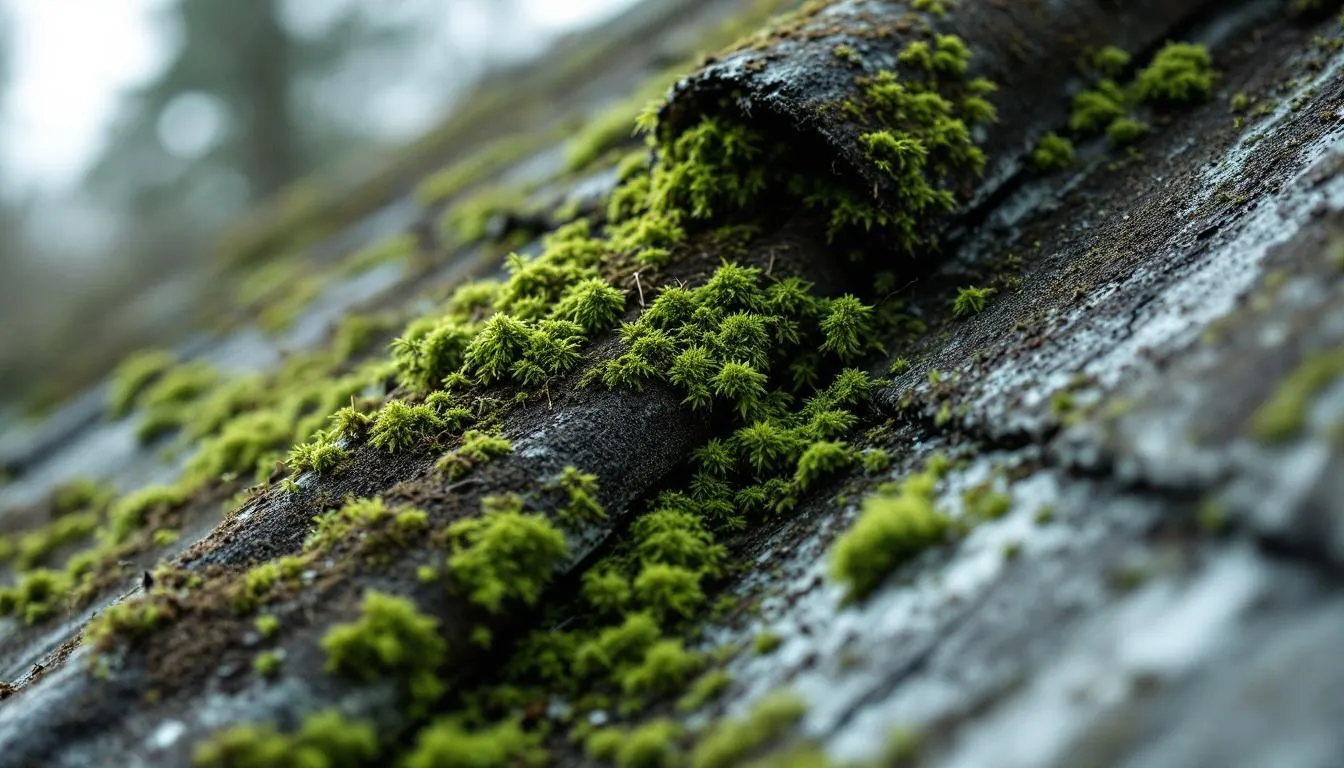
Nashville's warm, humid climate keeps roofs damp for long stretches each spring and fall. Summer humidity frequently stays above 70 percent. That is ideal for moss, lichen, and the blue-green algae that leaves black streaks across Middle Tennessee roofs. Shaded neighborhoods like Sylvan Park, Hillsboro Village, and Brentwood's wooded lots see it worst because trees keep roofs from drying out between rains. Moss lifts shingle edges as it grows underneath, and algae eats away granules faster than normal weathering would. Ignore it long enough and you are replacing the roof years sooner than you should have to.
Nashville Roof Repair Pros helps Nashville, TN homeowners fix moss and algae roof growth — call for a free inspection.
Quick Answer
Nashville's warm humidity and shady neighborhoods like Sylvan Park and Hillsboro Village keep roofs damp long enough for moss and black algae streaks to take hold. Moss holds moisture against shingles and slowly breaks them apart. A roofer safely washes the roof and can install copper or zinc strips to slow regrowth. Call if you see green patches or dark streaks spreading across your shingles.
Telltale Signs
Warning Signs to Watch For
- Black or dark gray vertical streaks running downslope from ridge to eave on north-facing slopes
- Green, fuzzy, or carpet-like moss growth visible on shingles, particularly in shaded sections
- Shingle tabs that are visibly lifted, cupped, or displaced where moss growth is thickest
- Gray or white crusty lichen patches that appear fused to the shingle surface and resist removal
- Accelerated granule loss immediately downslope from heavy biological growth zones
- Persistent dampness on the roof surface visible hours after rain has stopped in shaded areas
Root Causes
What Causes Moss and Algae Roof Growth?
Shade and Moisture Retention
Moss and algae need moisture and shade to take hold. Nashville's tree canopy gives them both on north- and east-facing roof slopes all over the city. Overhanging branches drop leaves and debris that hold water against the shingles. That shade also stops morning dew and rain from drying out. The roof stays wet long enough for biological growth to spread across the whole surface.
The Fix
Roof Cleaning and Branch Trimming
The growth gets treated and removed with low-pressure soft washing using a biodegradable algaecide safe for Nashville's watershed. Branches within ten feet of the roof surface get trimmed back to let in sunlight and airflow. That deals with the reason the growth keeps coming back, not just the stain you can see.
Absence of Copper or Zinc Inhibitors
Copper and zinc ions kill the organisms that cause roof staining and moss. Roofs with zinc strips at the ridge or copper-containing granules in the shingles stay clean for years. Many Nashville homes have no such protection at all. That is especially true of older three-tab shingle roofs and roofs put on quickly after storm events with basic contractor-grade shingles. Without protection, airborne algae spores floating through Nashville's humid summer air land and spread freely.
The Fix
Zinc Strip Installation and Algae-Resistant Shingle Specification
Zinc or copper strips go along the ridge so every rain carries a dilute ion solution down the slope. That continuously keeps biological growth from taking hold. When the roof is eventually replaced, algae-resistant shingles with copper-based granules get specified so the protection is built in from day one.
Organic Debris Accumulation
Leaf litter, seed pods, and pine needles pile up in roof valleys and along the gutter line. That debris stays wet and gives moss and lichen spores exactly what they need to germinate. Nashville's tulip poplar and sweet gum trees drop persistent debris across multiple seasons. Those accumulation zones stay damp almost constantly. Even slopes that get some sun can end up with aggressive moss growth when debris keeps piling up.
The Fix
Debris Removal and Preventive Maintenance Program
All debris gets carefully cleared from valleys, flashings, and low-slope zones without scratching the shingle surface. Then a regular maintenance schedule gets set up to keep those areas clean through Nashville's heavy fall and spring debris seasons. That prevents the wet conditions from coming back and giving biological growth another foothold.
Self-Diagnosis
Which Cause Applies to You?
Check the signs you're observing to narrow down the likely root cause before your inspection.
| What You're Seeing | Shade and Moisture Retention | Absence of Copper or Zinc Inhibitors | Organic Debris Accumulation |
|---|---|---|---|
| Growth is concentrated exclusively on shaded north-facing slopes under tree canopy | |||
| Black algae streaking is present uniformly across all slopes including fully sun-exposed ones | |||
| Heaviest moss growth is in roof valleys and behind chimney saddles where debris collects | |||
| Adjacent homes with similar tree exposure but newer roofs show no comparable growth | |||
| Branches directly overhang the affected growth zone and deposit visible debris onto the shingles | |||
| Lichen growth is present in addition to moss, indicating long-term undisturbed moisture |
Free Quote
Get a free quote in Nashville
No obligation — tell us what's going on and we'll text you back shortly.
Other Problems
Services That Fix This
Moss and Algae Roof Growth Near You
Also Helpful